
.svg)
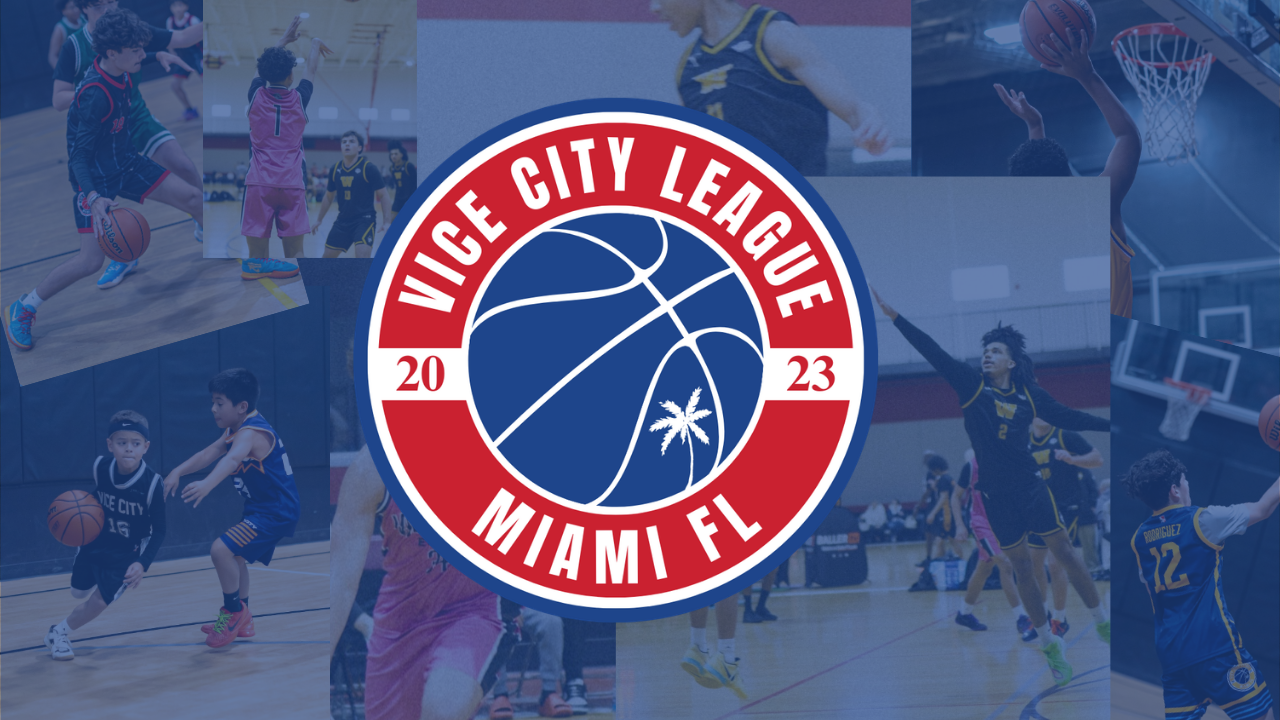
How Vice City Built a Junior NBA Experience in Miami
Vice City League didn't start with a pitch deck. It started outdoors, with a small group of kids and a founder who wanted to give his community something they couldn't get anywhere else.
Alex Marin founded Vice City Basketball in Miami to build a youth basketball program that felt premium, structured, and worth coming back to season after season. Today it serves players from 4th grade through high school, and it's built around three things: development, confidence, and community.
The way Alex describes it: a junior NBA experience at a youth scale.
The structure: more program than pickup
Most youth basketball feels like drop-in ball. Vice City is designed like a real program.
- Two practices a week, grouped by skill level
- Weekend games so players can apply what they learned in a competitive setting
- Recorded games and film access — not just scores on a scoreboard
- Tracked stats and custom player awards at the end of each season
- Trophies and end-of-season recognition that actually mean something
The coaching philosophy is straightforward: fundamentals first, confidence second, performance third. Defense and effort. Passing and decision-making. Footwork and balance. Turning practice reps into game actions — not flashy moves.
Why progress has to be visible
The hardest part of running a youth league isn't running the games. It's turning games into learning moments that stick — without burying coaches in admin work.
That's the problem SportsVisio was built to solve, and it's where Vice City found a fit.
For a youth league, SportsVisio does three things that matter:
- Film kids can actually watch and learn from — not just highlights, but full game context
- Stats that reflect what happened, not what it felt like — removing coach bias and parent memory
- A simple experience for parents and players — no chasing links across platforms
Alex put it plainly: "Watching film helps players dissect mistakes and recognize what they did well. Stats help them understand where they're improving, where they're stuck, and what to work for next."
Progress is the product
At the youth level, parents aren't buying games. They're buying growth.
When families can track progress across seasons, it changes the conversation from "did you have fun today" to "how are you improving, and what are we working on next." That's a different kind of program.
With season-over-season tracking, Vice City unlocks:
- Clear growth stories for players who start as beginners and develop fundamentals over years
- Objective basis for awards — Most Improved, MVP, Defensive Star — backed by actual numbers
- Motivation through slumps — kids see the larger arc, not just one bad game
Alex uses full-season stats (and even prior seasons) to power end-of-season recognition. That makes the hardware feel real — and earned.
What changed for players, coaches, and parents
Players set goals tied to real numbers. Score targets week to week. Reducing turnovers. Using film to understand why a specific decision went wrong. Older athletes especially take it personally — they see a bad stat line or tough film, and they go get extra reps.
Coaches get a clearer teaching tool. Instead of only explaining what happened, they can show it, pause it, and coach directly off a moment. And they stop doing the stat-keeping themselves — which, as Alex noted, was full of human error.
Parents get more visibility into what their child is actually doing, and a program that stands out from every other league that doesn't track anything beyond the final score.
The learning loop
Vice City runs on a simple four-step loop:
- Play the game
- Review what happened — film + stats
- Set a target for next week
- Put in reps that match the target
Highlights and film show decision-making in context. Spacing, shot selection, defensive positioning, effort plays that don't show up in post-game conversation. Stats surface the gaps kids (and parents) often miss: efficiency, turnovers, shot selection, and how those affect momentum.
For older players, shot charts add another layer, it's where here shots are coming from, which locations are efficient, which shots are being forced. Even without shot charts, film plus basic shooting data is already changing how Vice City players think about their game.
What's next
Vice City is building in two directions.
Younger ages. Alex wants to bring the same community and structure to kids as young as 4 to 6 — the age when they first fall in love with the sport.
New divisions. The team has discussed launching a men's league, bringing film and stats into an adult environment where most leagues still feel like "show up, play, go home."
In both cases the goal stays the same: create a higher-tier experience, make development visible, and give every player a reason to come back.
Vice City isn't just running games
It's building a development engine.
Structured practices. Weekend competition. Film and data that turn performance into something players can actually study. That combination gives kids something rare at the youth level — a clear way to learn, a clear way to measure progress, and a clear way to celebrate improvement over time.
That's what a junior NBA experience actually looks like. Not the logos. The loop.
About Vice City League
Vice City League is a Miami-based youth basketball program serving student athletes from 4th grade through high school. Founded by Alex Marin, the league focuses on development, community, and a structured basketball experience — weekly practices, weekend games, and full film and stat tracking powered by SportsVisio.
About SportsVisio
SportsVisio uses AI to turn game footage from any camera into full box scores, player highlight reels, and team insights. Used by youth leagues, clubs, and coaches across basketball and volleyball. Record the game. We do the rest.
Related Stories
.png)
.png)

Book a Demo and Get a Free Trial
Set up time to speak with our team and see our product in action.